First reading this short story, I expected it to be entirely about the first snowfall of the year. Along with the story being about the first snowfall of the year, I expected the presumable things that come along with winter to follow close behind-the family gathering, presents, food, etc. However, I was wrong, and should've know that from the start. As Foster stated in, How To Read Literature Like a Professor, weather isn't always just weather--there is a deeper meaning behind it. This point ties in with the use of snow in Silent Snow, Secret Snow by Conrad Aiken, and creates a bigger meaning with the use of theme.
In this story, Paul, the young boy becomes infatuated with daydreaming and thinking about snow. Everything else is put on hold and the only thing Paul cares about for the time being is snow. He stops caring about reality, homework, and grows distant from his mother and father. The theme in this story can be viewed as a common theme for coming of age stories, a rejection of reality. Snow is pure, innocent, the only truly good thing in his life. The paradise that he escapes to whenever he needs to. Reality is the real world--the filthy, tampered world where nothing is as it seems. The more and more he separates himself from the real world, the more he is happy and content in this dream state or world. That is why Paul rejects reality and becomes submerged into this dream world of only pure snow. Because if all is good and content, pure, so to say, what is there to be bad or go wrong?
Bibliography
Aiken, Conrad. "Silent Snow, Secret Snow." (n.d.): 1-12. Web. 26 Sept. 2014.
Monday, September 29, 2014

Thursday, September 4, 2014
Bibliography
Bibliography
Hamilton, Edith . Mythology. New York: Little, Brown and Company, 1942. Print.
Foster, Thomas C. How to Read Literature Like a Professor. New York: HarperCollins, 2003. Print.
"Hercules." GreekMythology. GreekMythology, 2000. Web. 4 Sept. 2014. <http://www.greekmythology.com/Myths/Heroes/Heracles/heracles.html>.
"The Old Testament - A Brief Overview." The Story of Creation. Bible History, n.d. Web. 04 Sept. 2014.
Morris, Henry M. "The Resurrection of Christ - The Best-Proved Fact in History." The Resurrection Of Christ. The Institute for Creation Research, n.d. Web. 04 Sept. 2014.
"Bible Gateway Passage: Matthew 27:32-56 - New International Version."Bible Gateway. Bible Gateway, n.d. Web. 03 Sept. 2014.
Kinsolving, Cary. "Kids Talk About God." Why Did Peter Deny Jesus Three Times? by Carey Kinsolving on Creators.com. Creators.com, n.d. Web. 04 Sept. 2014.
"Perseus." Perseus. N.p., n.d. Web. 02 Sept. 2014.
"Theseus and the Minotaur." Untitled Document. Ancient-Greece.org, n.d. Web. 04 Sept. 2014.
Hamilton, Edith . Mythology. New York: Little, Brown and Company, 1942. Print.
Foster, Thomas C. How to Read Literature Like a Professor. New York: HarperCollins, 2003. Print.
"Hercules." GreekMythology. GreekMythology, 2000. Web. 4 Sept. 2014. <http://www.greekmythology.com/Myths/Heroes/Heracles/heracles.html>.
"The Old Testament - A Brief Overview." The Story of Creation. Bible History, n.d. Web. 04 Sept. 2014.
Morris, Henry M. "The Resurrection of Christ - The Best-Proved Fact in History." The Resurrection Of Christ. The Institute for Creation Research, n.d. Web. 04 Sept. 2014.
"Bible Gateway Passage: Matthew 27:32-56 - New International Version."Bible Gateway. Bible Gateway, n.d. Web. 03 Sept. 2014.
Kinsolving, Cary. "Kids Talk About God." Why Did Peter Deny Jesus Three Times? by Carey Kinsolving on Creators.com. Creators.com, n.d. Web. 04 Sept. 2014.
"Perseus." Perseus. N.p., n.d. Web. 02 Sept. 2014.
"Theseus and the Minotaur." Untitled Document. Ancient-Greece.org, n.d. Web. 04 Sept. 2014.
Wednesday, September 3, 2014
Part 2- Biblical Allusions: The Resurrection
The Resurrection Biblical Allusion Source: Luke 24, John 20+21

- Jesus was crucified
- On the third day, Mary went to the tomb to look upon Jesus
- An angel appeared saying Jesus has risen
- Jesus rose
- More disciples began following Jesus
Part 2- Biblical Allusions: The Crucifixion
The Crucifixion Biblical Allusion Source: Matthew 27

- Jesus was publicly beaten
- He was mocked and struck in the head
- A crown of thorns was placed on his head and he was stripped naked
- Stake nails were driven in his wrists and was fastened to the cross
- Self-sacrifice
Part 2- Biblical Allusions: The Denial
The Denial Biblical Allusion Source: Matthew 26
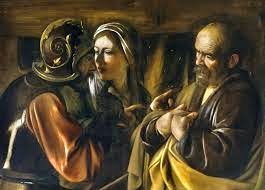
- Jesus said his disciples would abandon him
- Peter said no three times
- Despite saying he doesn't know Jesus, Jesus forgives Peter
Part 2- Biblical Allusions: Judas and the Betrayal
Judas and the Betrayal Biblical Allusion Source: Matthew 25, 26

- Jesus announces he will be crucified
- Chief priests are conspiring about arresting Jesus
- Chief priests find Judas who is paid to betray Jesus
- Judas kisses Jesus
- Chief priests arrest Jesus
Part 2- Biblical Allusions: The Last Supper
The Last Supper Biblical Allusion Source: Mark 14; John 13

- Teaches us about commitment
- Jesus sent two of his disciples ahead with instructions on where to prepare the Passover meal
- That evening Jesus sat down at the table with 12 apostles to eat his final meal
- One would soon betray him
Subscribe to:
Comments (Atom)